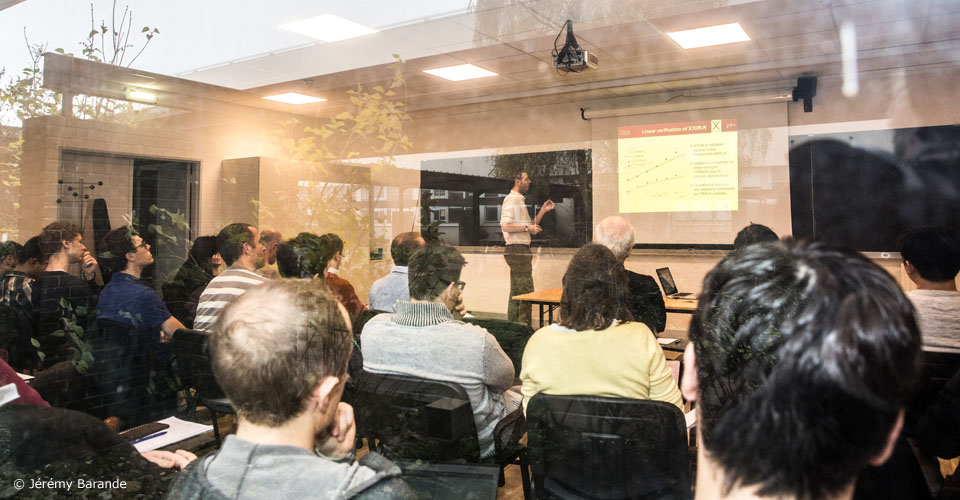
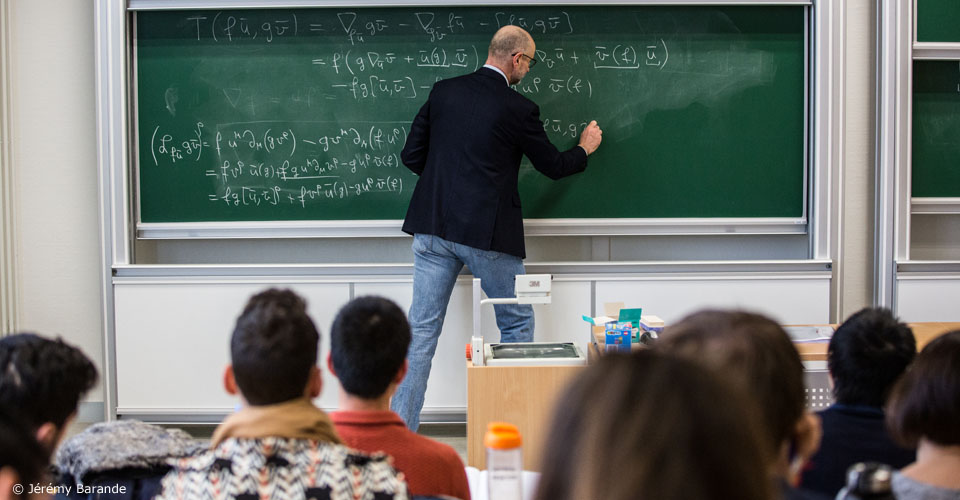
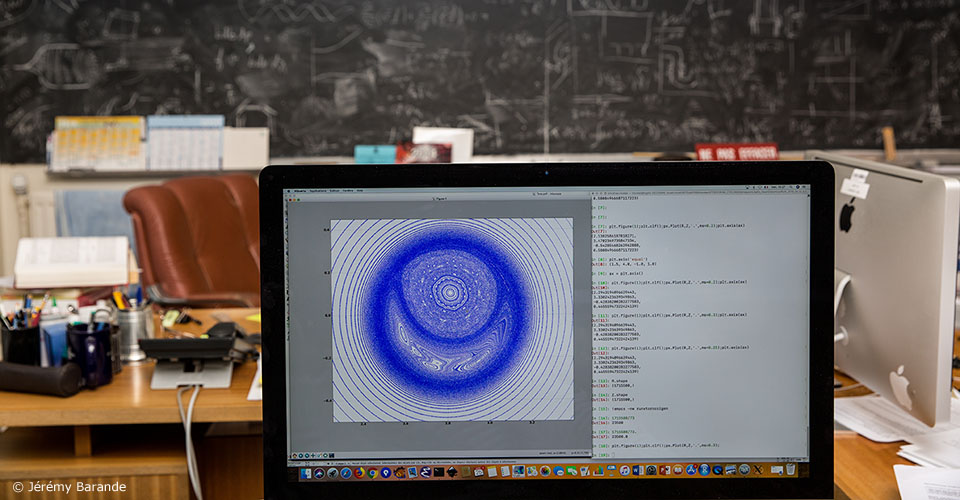
Le Centre de Physique Théorique (CPHT) réunit des chercheurs dont les activités couvrent un large spectre de la Physique, tant dans ses aspects fondamentaux qu'appliqués.
Le CPHT est une unité mixte de recherche (UMR 7644) du Centre National de la Recherche Scientifique (CNRS) et de l’Ecole polytechnique. Au niveau du CNRS, il est rattaché à l’Institut de physique. Le CPHT a également un partenariat avec le Collège de France.
Le CPHT, dirigé par Jean-René Chazottes, directeur de Recherche au CNRS, est implanté sur le campus de l’Ecole Polytechnique à Palaiseau, dans le bâtiment 6 et dans l'aile 0 du bâtiment 5. Le secrétariat se situe dans le Bâtiment 6, bureaux 06.1046 et 06.1045. 
 

Adresse postale : 
CPHT 
Ecole Polytechnique 
91128 Palaiseau cedex 
France

Tél. Secrétariat : 01 69 33 42 01

Pour écrire un email à un membre du laboratoire : prenom.nom@polytechnique.edu


The particle physics group will be hosting a seminar by mathematical physicist Adrien Florio (Bielefeld U.) on Friday December 19th at 1pm in salle Louis Michel.

Thermalization and entanglement structures of relativistic fields: explorations in low-dimensions

Past decades have revealed the crucial role played by the entanglement structure of quantum states in explaining both phases of matter and thermalization—the emergence of statistical physics from unitary time evolution. Yet our understanding of entanglement in relativistic field theories remains limited, largely confined to conformal and holographic settings. At the same time, we don't have a clear picture of how our universe actually reached thermal equilibrium after inflation. We do not understand why the quark-gluon plasma produced in heavy-ion collisions thermalizes so fast, or what the actual phase diagram of QCD is. In this talk, I illustrate how progress can be made in filling this gap starting from the study of one-dimensional relativistic field theories. I present results on the real-time dynamics of the massive Schwinger model, which shares key features with QCD. In this setup, the medium created by hard back-to-back particles thermalizes through entanglement production. I then move on to discuss how a refined understanding of entanglement in relation to symmetries can serve as a practical tool for detecting and characterizing different phases of matter. Indeed, the so-called "entanglement asymmetry" related to the chiral symmetry in the Schwinger model can be computed analytically in the massless limit, as a function of temperature. Remarkably, it is parametrically more sensitive to symmetry breaking than the corresponding local order parameter, the chiral condensate.

Indéfini

Séminaire conjoint LSI+CPHT+PMC = M4S

Jeudi 18 décembre à 11h00

Nouvelle salle de séminaire PMC (05-10-26A)

Yuimaro Kubo
(
Principal Research Scientist à l'Okinawa Institute of Science and Technology au Japon)

Title: A near-quantum-limited diamond maser amplifier

Abstract: Microwave quantum technologies require amplification of weak signals with minimal added noise at millikelvin temperatures. This stringent demand has traditionally been met by superconducting parametric amplifiers. We demonstrate the first-ever non-superconducting microwave amplifier with near-quantum-limited noise performance, based on a maser operating at millikelvin temperatures. The active medium comprises substitutional nitrogen defects (P1 centers) in a diamond crystal, placed within a microwave resonator. Our device delivers over 30 dB of gain at 6.595 GHz, and the minimum noise temperature of about 1 K, corresponds to an added noise of 3 quanta. The amplifier features 20 to 30 dB higher compression points than the state-of-the-art superconducting devices.

Indéfini

Séminaire conjoint LSI+CPHT+PMC = M4S

mercredi 3 décembre à 11h

Salle de Conférence Louis Michel au CPHT

Yusuke Nomura
('Université de Tohoku au Japon)

"Electronic structure of nickelate superconductors"

The recent discovery of superconductivity in infinite-layer and bilayer nickelates has attracted significant attention. In this seminar, after briefly outlining the key differences between these two classes of nickelates, we will focus primarily on the electronic structure of infinite-layer nickelates, (R,Sr)NiO₂ (R = La, Nd) [1]. In particular, we will examine the similarities and shared features between nickelates and cuprates [2], and discuss the essential degrees of freedom relevant to superconductivity. We also disentangle the correlation effects in the multiband electronic structure of infinite-layer nickelates by comparing theoretical and experimental results for transport properties (Hall and Seebeck coefficients) [3].
 

[1] For a review, Y. Nomura and R. Arita, Rep. Prog. Phys. 85, 052501 (2022).
[2] Y. Nomura et al., Phys. Rev. B 100, 205138 (2019).
[3] Osada et al., Sci. Adv. 11, eadv6488 (2025).
[4] If you are interested in bilayer nickelates, see also, Phys. Rev. B 112, L020504 (2025).

Indéfini

Time:14 pm, Dec 3th Wednesday

Location: Salle de Conférence Louis Michel

Speaker: Francesco Bertucci (University of Mississippi) 

Title: Bootstrapping Euclidean latticese

Abstract: Using numerical bootstrap methods, we constrain the spectrum of the Laplacian operator in $d$-dimensional flat manifolds, as well as the triple integrals of its eigenmodes. We provide many examples of $d$-dimensional flat tori that populate these bounds. In certain dimensions, our bounds are saturated by some special lattices, including the $E_8$ lattice in 8d and the Leech lattice in 24d. These bounds admit an interpretation in the context of Kaluza-Klein theories and have connections with the sphere packing and kissing number problems.


Indéfini


Pierre Wang soutiendra publiquement ses travaux de thèse le vendredi 5 décembre 2025 à 14h00  à l'Ecole polytechnique, CPHT, Amphi Louis Michel.

Titre :  "Perturbative and non-perturbative analysis of the renormalization group equations"
Directeur de thèse : Christoph Kopper

Lien zoom : https://ecolepolytechnique.zoom.us/j/92185693946?pwd=ySy90JPcxbf7RLUJpaaaLHzK6AHhza.1
Meeting ID: 921 8569 3946
Password: 497163

Français

Time: 14 pm to 15 pm, Nov 26th, Wednesday  

Location: Salle de Conférence Louis Michel

Speaker: Dionysios Anninos (King’s College London)

Title: Features of the Partition Function of a Λ > 0 Universe

Abstract: We discuss properties of the gravitational path integral for rhetorics of gravity with Lambda>0. We consider the problem in various spacetime dimensions, and for various matter fields. Time permitting, we also comment on the two-dimensional case.


Indéfini

1st of December at 15:00-17:00

Salle Louis Michel,

CPHT, École Polytechnique.


The seminar will include two 45-minute talks followed by a discussion:

1) Sergei Popruzhenko (NRNU Moscow Engineering Physics Institute and Prokhorov General Physics Institute RAS, Moscow, Russia)

"On the theory of collective tunnelling ionisation"

2) Arseny Mironov (CPHT)

"Applications of strong-field ionisation in ultra-high-intensity laser fields: from in situ characterisation of the laser focus to investigating fundamental strong-field QED effects."


Organizers: Arseny Mironov and Mickael Grech


Indéfini

November 18 (Tuesday), 14:00, Room Louis Michel (CPHT) 

in the room Louis Michel (CPHT

Speaker: Álvaro Gómez León (Instituto de Física Fundamental, Madrid)

Title: Extrinsic topology in photonic lattices

Abstract: Topological phases give rise to edge states that can be used for technological applications. Among them, Floquet phases, which are obtained by periodically driving the system, have been shown to be exceptionally rich and externally tunable. In this talk, I will discuss extrinsic topology, which is a particular type of topology that emerges in Floquet systems that follow a discrete time evolution. Finally, I will show the existence of these topological phases in photonic lattices using a double fiber-ring setup and the manipulation of their edge states.

Indéfini

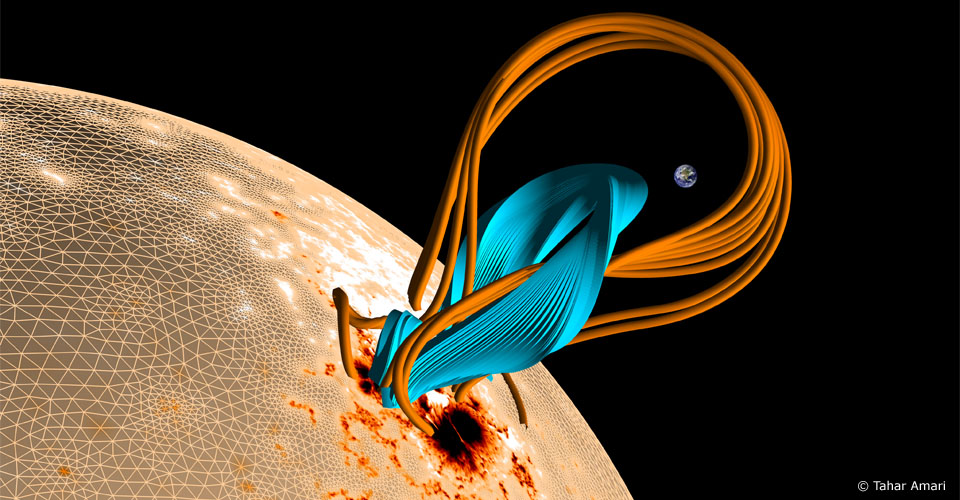
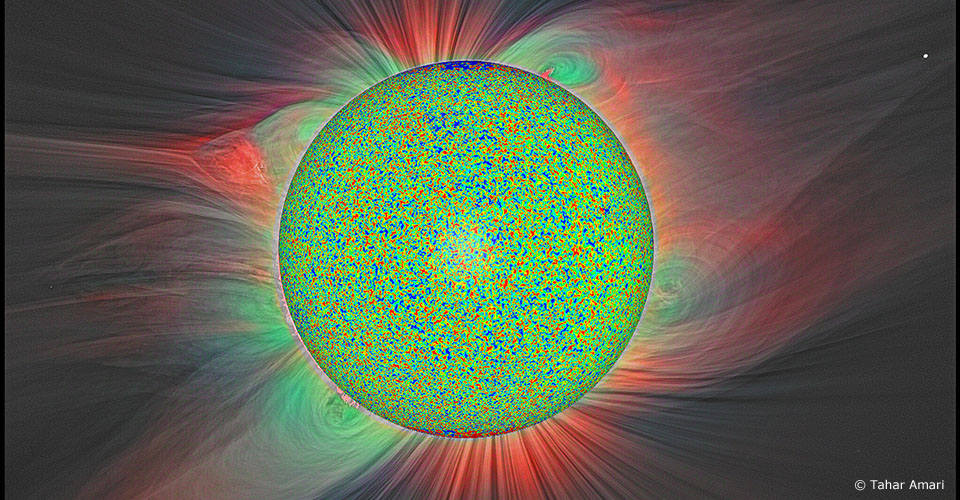
L'article « Couronne solaire : ses températures révèlent leur mystère » a été publié dans CNRS Le Journal.

Lire l'article : https://lejournal.cnrs.fr/articles/couronne-solaire-ses-temperatures-revelent-leur-mystere

Ces travaux sont publiés dans la revue The Astrophysical Journal Letters. Ils ont été conduits par des physiciens du Centre de physique théorique (CPHT, CNRS / École polytechnique), ainsi que de l’Institut d’Astrophysique Spatiale (IAS) et d’Astrophysique, Instrumentation Modélisation (AIM).

Indéfini

Pages